

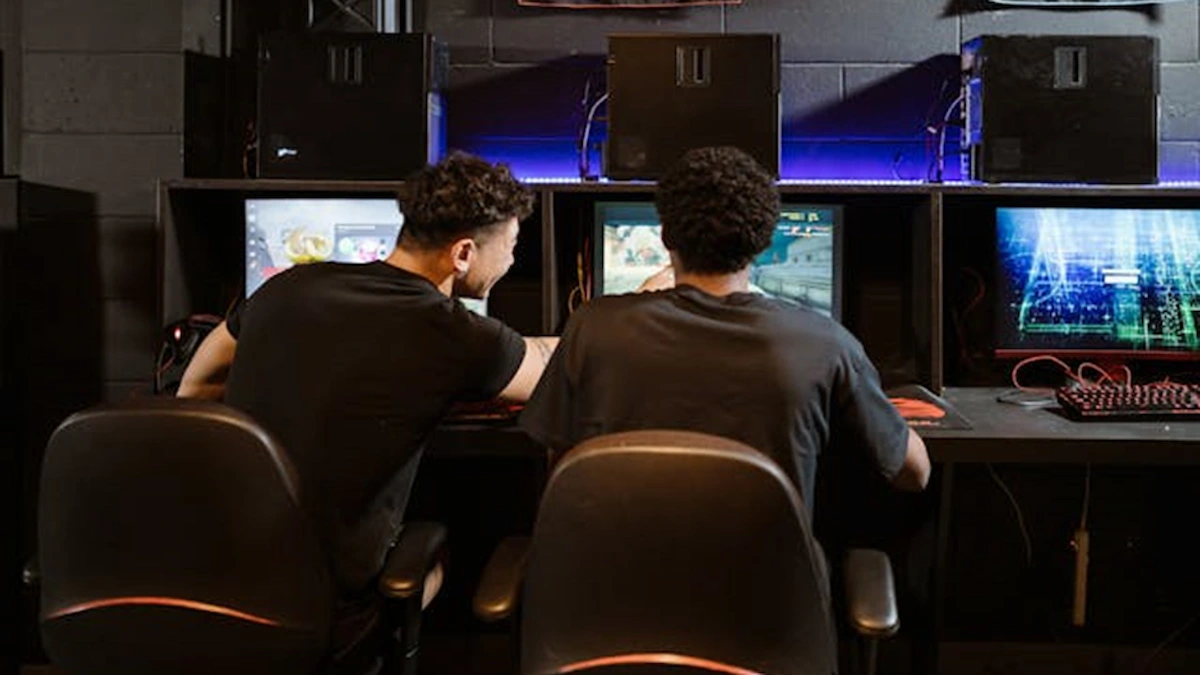
The rise of gamified streaming
Video game streaming has evolved into increasingly interactive and gamified experiences, with Twitch, Kick and new technologies redefining how viewers play, monetize and engage.

Video game streaming has changed dramatically since the pandemic. In recent years, platforms like Twitch and Kick have seen their popularity skyrocket, to the point that polls, tips, and interactive minigames have become a core part of the broadcasts.
But what are the implications of this for the average gamer? In this article, we’ll try to answer that question.
Interactive Betting and the New Creator Economy
Have you ever heard of Channel Points? If you’re a Twitch user, you probably already know that they’re the loyalty currency integrated into the app, which you can earn by watching streams, sending Cheers with Bits, or buying them directly.
According to recent data, the platform currently has around 240 million monthly active users, and many of them spend money in addition to watching the streams. In fact, they use their channel points to fill streamers’ tip jars in a system that’s proving to be the dominant revenue model for a new generation of creators who have realized that audience control is worth more than advertising.
Although Kick is newer, it’s not far behind in terms of popularity. However, this platform is much more geared towards gambling. There are slot players who can generate six-figure monthly incomes thanks to sponsorships and the betting options their followers participate in. Perhaps the most famous of these is Trainwreckstv, whom many creators consider a role model.
Furthermore, there are external tools like Crowd Control, which allow followers to create enemies, reverse controls, and wreak havoc on any player’s stream in exchange, of course, for the corresponding payment. This has opened the door to a new type of monetization for mid-level creators, who are seeing how this system has dethroned the traditional advertising revenue model.
The Power of Smart Gamification
We all know the power of progress bars and rewards, as they have contributed to making video games a resounding success over the years.
Now, streaming platforms have taken advantage of this idea to use the visual language of video games in environments that have nothing to do with them. Take, for example, Twitch’s prediction feature: viewers can bet their channel points on the outcome of a live match and watch them multiply or vanish when the countdown ends. And all of this is decided within the broadcast itself, without needing to open another app or wallet.
The dopamine that this system generates in the human brain alerted the UK Gambling Commission, which updated its guidelines and focused on the «gambling» integrated into broadcasts, considering them subject to gambling legislation, even though they don’t involve «real money» as such. Platforms were excessively exploiting the legal ambiguity surrounding «virtual currency» and «real value» to avoid being classified as gambling operators, with all the consequences that entails.
Loot boxes are a clear example of how such a strategy can ultimately backfire on operators. These video game rewards met the definition of «gambling» in the eyes of Belgian authorities, who banned them back in 2018. Shortly after, other countries, such as Spain, followed suit, forcing creators to remove or modify these features in a number of European markets.
Streaming platforms seem destined to face this same debate, as they are selling risk and reward mechanics to an audience that includes many minors.
As a player, it is essential to be well-informed. There are independent resources that evaluate the credibility of online platforms and casinos and include responsible gambling tools. The reputation and licensing of a platform will always be more important than the selection of games it can offer.
The Engine Powering Live Gaming
One of the main reasons for Twitch’s rise has been its ultra-low latency mode, which has reduced the delays of up to 45 seconds in YouTube live streams to just a couple of seconds. This means your predictions arrive almost in real time, making it much more interactive.
WebRTC protocols and edge computing networks are the driving force behind this infrastructure, which features servers located geographically close to the viewer so that data doesn’t have to travel long distances. Amazon Web Services (AWS), Twitch’s parent company, streams petabytes of live video daily through hundreds of these nodes, using the same hardware as Xbox Cloud Gaming.
The technical gap between watching and playing has been gradually closing without us even noticing.
What’s next?
A true revolution is on the horizon, one that promises to leave us speechless and is spearheaded by VR.
Since the launch of Meta Quest 3 in late 2023, developers have been working hard to build shared viewing environments, such as virtual stadiums, event-based parties, and social spaces. Meanwhile, virtual reality headsets are selling like hotcakes.
A study by Stanford’s Virtual Human Interaction Lab suggests that the impact of this technology will be enormous, as virtual reality offers immersive experiences that generate more intense emotional and behavioral responses than equivalent content on a flat screen. This can also be applied to the world of live betting: participants feel more immersed in the betting environment (and even feel greater social pressure from the avatars surrounding them) than if they were in a neutral environment at home.
Regulators, for their part, are keeping a close eye on the situation. The EU Digital Services Act, for example, includes provisions broad enough to cover immersive interactive platforms, although these have not yet been thoroughly tested with specific virtual reality features.
People have long enjoyed integrated wallets in online gaming experiences, but never a physical presence. When virtual reality changes this, we’ll need to step up to ensure gamers enjoy all the benefits of this technology without its significant potential drawbacks.
Source: www.marketingdirecto.com


