

Adobe Firefly launches AI models trained in the creator’s style
Creators can train AI with their own images and work with multiple models and smart assistants within the same workflow.

The capabilities of Adobe Firefly, the family of generative artificial intelligence models for producing creative content developed by this design company, are expanding. The company has introduced new features within its AI platform with the goal of facilitating the creation of consistent, scalable content aligned with the visual identity of brands and creators.
In recent years, AI has transformed the technical possibilities, creativity, and workflows of design, motion graphics, and marketing professionals. In this landscape of accelerated change, Adobe is strengthening its offering with the launch of new tools aimed at optimizing creative processes.
Adobe Firefly: Here’s what’s new
Custom models: from prompt to creative control
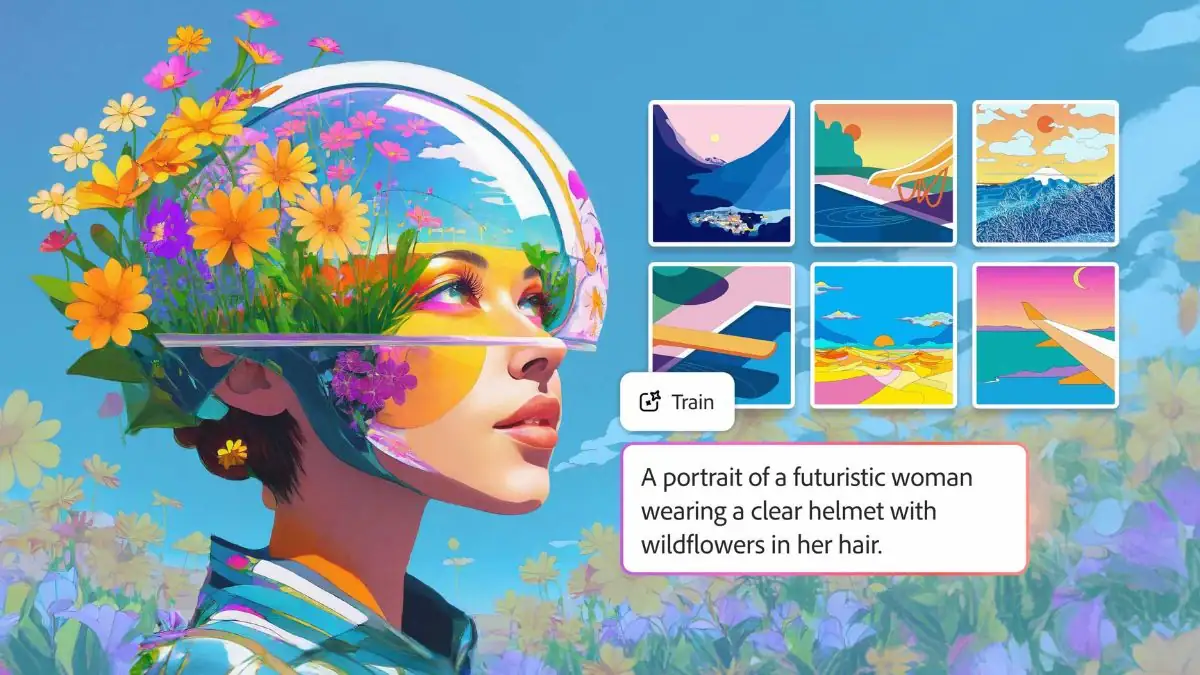
The main new feature in Adobe Firefly is the launch of custom models, a functionality that allows users to train the AI with their own images to capture specific styles, characters, or photographic finishes. It is currently in public beta. This capability seeks to solve one of the major challenges of current creative work: maintaining visual consistency across campaigns, formats, and platforms without having to start from scratch on each project.
These models are especially useful in fields such as illustration—where aspects like line weight and color palette are crucial—, the creation of characters that must appear consistently in multiple scenes, or photographic styles that need to be replicated across large volumes of content. Once trained, the model is integrated into the creator’s workflow and can be reused in different briefs and campaigns. This allows professionals to explore new creative directions without losing their brand identity.
A mix of the best generative tools
Along with this functionality, Firefly expands access to more than 30 industry-leading AI models within a single creative environment. These include offerings from various companies (Google’s Nano Banana 2 and Veo 3.1, Runway’s Gen-4.5, etc.), as well as Adobe’s Firefly Image 5 model. This ecosystem allows users to generate with one model, refine with another, and continue editing with professional tools without leaving the platform.
Quick Cut: An Editing Agent
Firefly also incorporates new video and image tools designed to accelerate the transition from concept to final product. Among these, Quick Cut stands out, transforming raw footage into a structured first cut in minutes, along with expanded editing capabilities that make it easier to add or remove visual elements, enlarge scenes, or adjust details with greater precision. Generation and editing are thus integrated into a seamless workflow that aims to reduce friction in the creative process.
Project Moonlight: Conversational AI Redefines Creative Workflows
The company is focusing on the evolution of the creative process itself, driven by AI. Therefore, it has expanded access to the private beta of Project Moonlight. This is a new conversational interface that allows users to describe an idea in a chat and have the system execute real actions within tools like Photoshop, Express, or Acrobat. It works across all Adobe applications, aiming for a smooth transition from concept to completion. It leverages its own resources, libraries, and pre-trained styles.
All these developments point to a scenario where creators go beyond simply creating content with AI, actively guiding the process through conversation and controlling every phase of creative development. What began as an almost experimental dynamic—writing an instruction and getting an image—is evolving into processes where generation, iteration, and refinement coexist in the same work environment. Now, the integration of models, editing, and interaction with intelligent assistants in a single environment reflects a clear trend: AI is becoming a structural layer of creative work, more geared toward amplifying human talent than replacing it.
Source: www.marketingdirecto.com


